Tuesday, August 22, 2017

"I Woke Up," Jameson Fitzpatrick


and it was political.

I made coffee and the coffee was political.

I took a shower and the water was.

I walked down the street in short shorts and a Bob Mizer tank top and they were political, the walking and the shorts and the beefcake silkscreen of the man posing in a G-string. 

I forgot my sunglasses and later, on the train, that was political, when I studied every handsome man in the car. Who I thought was handsome was political.

I went to work at the university and everything was
very obviously political, the department and the institution.

All the cigarettes I smoked between classes were political,where I threw them when I was through.

I was blond and it was political. So was the difference between “blond” and “blonde.”

I had long hair and it was political. I shaved my head and it was.

That I didn’t know how to grieve when another person was killed in America was political, and it was political when America killed another person, who they were and what color and gender and who I am in relation.

I couldn’t think about it for too long without feeling a helplessness like childhood. I was a child and it was political, being a boy who was bad at it. I couldn’t catch and so the ball became political.

My mother read to me almost every night and the conditions that enabled her to do so were political.

That my father’s money was new was political, that it was proving something.

Someone called me faggot and it was political.

I called myself a faggot and it was political.

How difficult my life felt relative to how difficult it was
was political. I thought I could become a writer
and it was political that I could imagine it.

I thought I was not a political poet and still my imagination was political.

It had been, this whole time I was asleep.

Sunday, August 20, 2017

"Both Sides Prayed to the Same God," Bill Federer

Death of Stonewall Jackson

"A few moments before he died, as he was losing consciousness, he said: 'Let us cross over the river, and rest under the shade of the trees.'

Most Civil War historians hold the opinion that had General Stonewall Jackson been alive and commanded two months later at the Battle of Gettysburg, the South may have won the battle, and possibly the war.

Jackson’s death was difficult to reconcile, as he was exemplary in faith and virtue. Loyal to Virginia, he was against slavery and freed the slaves he inherited from his wife’s estate.

Beginning in 1855, Jackson participated in civil disobedience every Sunday by teaching a Colored Sunday School class at the Lexington Presbyterian Church. Though a Virginia law forbade teaching slaves to read, Jackson taught both slaves and free blacks, adults and children, to read the Bible.

President Franklin D. Roosevelt stated, Sept. 17, 1937: 'I came into the world 17 years after the close of the war between the States. … Today … there are still many among us who can remember it. … It serves us little to discuss again the rights and the wrongs of the long 4-years’ war. … We can but wish that the war had never been. We can and we do revere the memory of the brave men who fought on both sides. … But we know today that it was best … for the generations of Americans who have come after them, that the conflict did not end in a division of our land into two nations. I like to think that it was the will of God that we remain one people.'

At the Confederate Memorial in Arlington Cemetery, President Coolidge said, May 25, 1924: 'It was Lincoln who pointed out that both sides prayed to the same God. When that is the case, it is only a matter of time when each will seek a common end. We can now see clearly what that end is. It is the maintenance of our American ideals, beneath a common flag, under the blessings of Almighty God,'"  "Civil War: 'Both sides prayed to the same God,'"Bill Federer, American Minute, 03/29/2015. 

   Johnny Cash
"Battle Hymn of the Republic"

Thursday, August 17, 2017

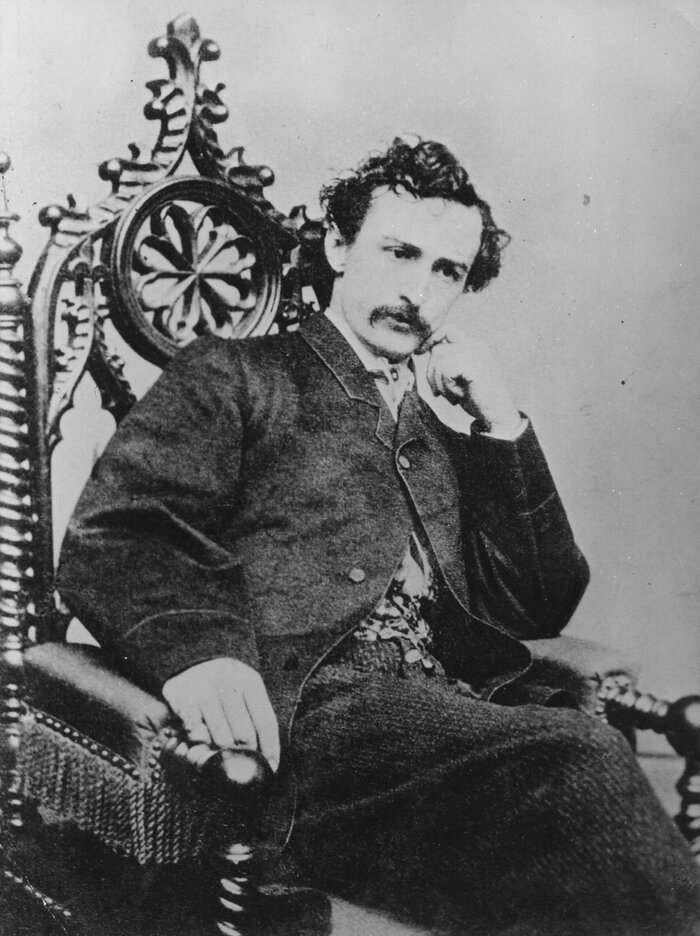
"The Ballad of Booth," Steven Sondheim's Assassins


"...Booth was not a madman, according to Alford. In fact, he was politically motivated to assassinate Lincoln.

'John Wilkes Booth was one of those people who thought the best country in the history of the world was the United States as it existed before the Civil War,' Alford says. 'And then when Lincoln came along, he was changing that in fundamental ways.'
Those ideological differences include increasing the power of the federal government and emancipating the slaves, both things Booth was vehemently against. He was angered that the government instituted an income tax and the military draft, and that the government occasionally suspended habeas corpus, a legal protection against unlawful imprisonment. All these things, Alford says, agitated Booth,"  "Who Was John Wilkes Booth...," NPR.


Victor Garber- John Wilkes Booth
Patrick Cassidy-Balladeer
Sondheim Celebration
Carnegie Hall, 1992,

Wednesday, August 16, 2017

Thomas Jefferson's "Deplorable Entanglement"

Thomas Jefferson: Liberty & Slavery

Thomas Jefferson helped to create a new nation based on individual freedom and self-government.  His words in the Declaration of Independence expressed the aspirations of the new nation. But the Declaration did not extend “Life, Liberty, and the pursuit of Happiness” to African Americans, indentured servants, or women. Twelve of the first eighteen American presidents owned slaves. Thomas Jefferson drafted the Declaration and called slavery an “abominable crime,” yet he was a lifelong slaveholder. Fearful of dividing the fragile new nation, Jefferson and other founders who opposed slavery did not insist on abolishing it. It took 87 more years―and the Civil War, the Emancipation Proclamation, and the 13th Amendment―to end slavery.

Jefferson and the Enlightenment

Jefferson and other members of the founding generation were deeply influenced by the 18th-century European intellectual movement known as the Enlightenment. Enlightenment philosophy stressed that liberty and equality were natural human rights. 
Colonial Americans argued that King George III and Parliament had denied them the basic rights of British citizens. Despite the pervasiveness of slavery in their society, the revolutionary generation envisioned a new American government that secured the rights and freedoms of its citizens. However, these rights and freedoms did not extend to slaves. 

The Declaration of Independence

In the Declaration, Jefferson eloquently announced the creation of the new American nation. He presented Americans as a self-governing people committed to the principles of liberty and equality in the face of British tyranny. “All men are created equal,” Jefferson wrote, and the importance of this ideal necessitated that “a people … advance from that subordination in which they have hitherto remained” in order to “institute new government.” The founders’ vision did not include one-fifth of the American population: enslaved men, women, and children who labored in nearly every one of the “Free and Independent States.”

“This Deplorable Entanglement”

Jefferson and many other patriots believed slavery should be abolished in the new American nation. Emancipation would fulfill the ideal that "all men are created equal."
Yet over the course of his life Jefferson himself owned 600 people. He was unable to extricate himself from what he called the “deplorable entanglement” of slavery.
Jefferson spent much of his life wrestling with and proposing various solutions to this national problem. But slavery was not abolished, and he remained a slaveholder throughout his life.

A Society Dependent on Slavery

Slavery made the world Thomas Jefferson knew. The colonial society into which he was born—in 1743 in what became Albemarle County, Virginia—would not have existed without it. Enslaved people tilled his father’s tobacco fields, cured the tobacco and packed it for shipment, cooked and served the family’s meals, cared for Thomas Jefferson and his siblings, and accompanied him to the College of William and Mary. The profits from slave-based agriculture made his parents’ household and lifestyle, and his education and exposure to the colonial capital of Williamsburg, possible. Though Jefferson came to abhor slavery, his livelihood depended on it.

Enlightenment, Freedom, and Slavery

Enlightenment philosophy strongly influenced Jefferson’s ideas about two seemingly opposing issues: American freedom and American slavery. Enlightenment thinkers argued that liberty was a natural human right and that reason and scientific knowledge—not the state or the church—were responsible for human progress. But Enlightenment reason also provided a rationale for slavery, based on a hierarchy of races..., "Slavery at Monticello: Paradox of Liberty," The Smithsonian African American History and Culture.

Tuesday, August 15, 2017

Honoring the Confederate Flag


"Lessons From The Civil War 150 Years Later: U.S. Should Stop Killing People Without Good Reason,"

Doug Bandow

"...Never has a war better illustrated the adage that the victors write the histories. What could possibly justify four years of mass slaughter and destruction? 

Southerners contended that states had a constitutional right to secede. There were fair arguments on both sides. However a dispassionate court might rule, the more important question was: what could warrant killing those on the other side of the debate? 


In particular, why should a democratic republic with a limited government built on a commitment to individual liberty respond to dissatisfied citizens desiring to join a new political community by killing them—as well as invading their lands, overthrowing their institutions, and burning their homes? Even if Southerners were acting foolishly and illegally in advocating secession, as I believe, they surely did not deserve this response.

Eliminating slavery would have offered a powerful moral cause for war. Human bondage was no minor blemish, but a fatal flaw of Southern society. And no government which uses its power to hold people in slavery can be either moral or limited.

However, abolition isn’t why the two sections fought. The seven Deep South states left out of fear for the security of their 'peculiar institution.' But ever-practical Abraham Lincoln called out the troops to maintain the Union, not outlaw human bondage. Racism was rife in the North and abolitionists were a decided minority. A call to arms for liberating slaves would have brought forth a trickle rather than flood of army recruits.... "

"...Despite the unnecessary casualties and destruction of the Civil War, most Americans today still reflexively call Lincoln a great president who 'saved' the country. He did end slavery, a notable achievement, yet war probably wasn’t necessary to do so. In fact, only one other nation abolished human bondage through violence—Haiti decades before. 


Every other slave society ended the awful practice peacefully. America was not even the last slave system to go; Brazil abolished the deeply rooted institution legally in 1888. No Brazilians died to free that country’s slaves...,""Lessons From The Civil War 150 Years Later...," Doug Bandow,Contributor, Forbes Magazine, April 9th, 2015.

Monday, August 14, 2017

Liberty and Justice for All


Human failures
Ignored and unnoticed
Life goes on-
Oblivious to the suffering
When life stops for those
We’ve Diminished, Dismissed and
Betrayed.

Our youngest victim:
George Junius Stinney, Jr.-
A boy of 14
Guilty before proved innocent
Legally lynched
Tried, Convicted, and
Electrocuted.
His final breaths
Agonizing-
A young life brutally
Extinguished.

Murdered White girls,
Thrown into a muddy ditch
A shroud of dirty water,
Covering bodies
Cold, bruised, broken
For riding bicycles
At the wrong place and time
While looking for “Maypops,”
Passion-flowers
Never found.

Heinously taken-
Their final moments
Horrifying,
Mary and Betty are laid to a
Restless peace.
While a "Prodigal Son’s" 
Body Burns
His Soul tormented in the
Hell of Abomination:  
Undue, Unmerciful,
Unrelenting. 

Watching over
Children and fools,
The Lord hears His prayers
After seven decades
A conviction vacated,
His punishment deemed
“cruel and usual”
For young George,
Poor and Black,
A man-child forever
At the wrong Place
And Time.

Grace and mercy
Right the wrongs of
Our injustices.
Yet cannot heal
Gaping wounds,
Bleeding for Forgotten Souls
Lost and obscured
In the shadow of prideful
Idealism.
\